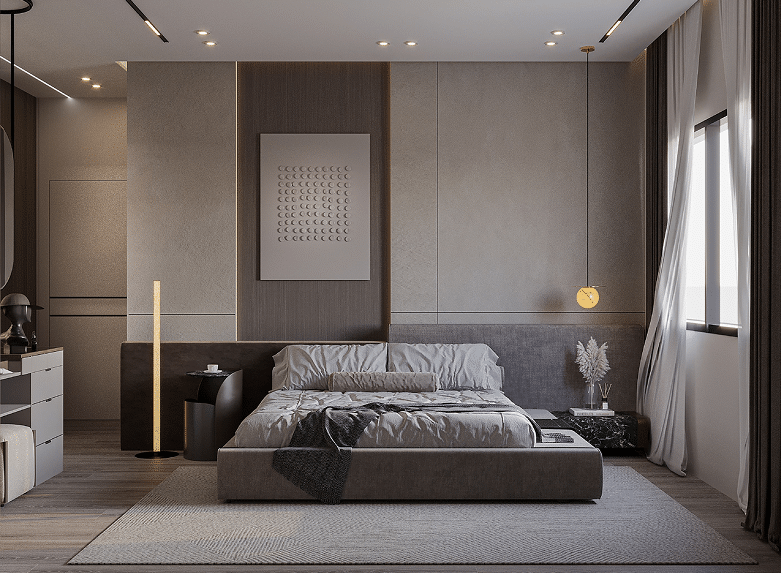
D Design bedroom planning guide
Bedroom Design: Layout, Storage, Lighting and Comfort
Bedroom design should make rest feel natural and daily routines feel uncomplicated. A successful room gives the bed a calm position, keeps movement clear, puts storage where it supports dressing, controls light at the right moments, and uses color and texture to create a settled atmosphere.
Layout: What should a bedroom plan resolve first?
A bedroom layout should resolve sleep, movement, dressing and storage before decorative choices begin. Start with the room itself: doors, windows, wall interruptions, fixed joinery, switches and any awkward corners. Then list what must happen there. Some bedrooms need only sleep and clothes storage, while others must also support reading, grooming, remote work or a child’s care routine.
Draw the intended furniture as complete pieces, including the space needed to open a wardrobe, reach a drawer, pull back curtains and change bedding. A plan can look balanced while empty yet become frustrating once doors overlap or a chair blocks a cabinet. Test each action in the order it normally happens, from entering the room to getting dressed and preparing for sleep.
Rest
Give the sleeping area the quietest visual position and reduce activity around the head of the bed.
Movement
Keep direct paths to the bed, wardrobe, window and bathroom free from projecting corners and loose objects.
Routine
Place lighting, charging, dressing and storage where each task occurs, so the room supports habits without extra clutter.
Judge the plan from a normal evening routine. Enter with your hands full, put belongings away, close the curtains, reach the bed, switch off the light and move safely if you wake during the night.
Bed placement: Where should the bed go?
Bed placement works best when the bed has a clear visual anchor and does not obstruct the room’s main routes. A solid wall often creates a calm background for the headboard, but the right wall also depends on the door, windows, storage and the shape of the room. From the pillow, the entrance should feel easy to notice without placing the bed directly in the busiest line of movement.
Check both sides of the bed as working areas. Each sleeper may need a surface, a reading light and access to storage. Wall-mounted shelves or lights can reduce floor congestion. If only one side remains open, confirm that changing sheets and reaching curtains still feels manageable.
How do windows affect bed placement?
Windows influence glare, privacy, drafts and the position of curtains. Avoid a layout where window treatments are trapped behind the headboard or where early light falls directly across the pillow unless that suits the sleeper. A bed beneath a window can work when there is no better wall, provided the window remains usable and the headboard does not interfere with the opening or fabric.
Plan the whole composition before buying a large bed or headboard. D Design’s modern interior design guide offers related ideas for coordinating furniture, materials and contemporary spaces across the home.
Storage: How can a bedroom stay organized?
Bedroom storage should follow the type, volume and frequency of the belongings kept in the room. Separate everyday clothing from occasional items, then assign the most accessible zones to what is used most. Hanging space, shelves and drawers should reflect the actual wardrobe rather than a generic internal arrangement. Empty space above one category cannot compensate for crowded space in another.
Choose furniture after checking how it opens. Sliding wardrobe fronts can help where a hinged door would conflict with the bed, while hinged fronts make the full interior easier to see. Drawers need clear pull-out space. Bed storage can hold less frequent items, but it should not become the only home for things used every morning.
Use open storage with restraint
Open shelves suit a small collection of books or personal objects, yet too many exposed items can make the sleeping area feel active. Closed storage gives spare linens, cables and visual clutter a quieter home. Keep a dressing surface clear for daily use.
Joinery can solve difficult corners and combine wardrobes, a dressing position and display space into one composition. Before commissioning it, check access to sockets, curtains and maintenance points. The internal plan matters as much as the doors because an elegant elevation does not fix inconvenient storage.
Lighting: What light does a bedroom need?
Bedroom lighting should support arrival, dressing, reading and winding down without relying on one bright ceiling source. General light helps with movement and cleaning. Task light serves wardrobes, a dressing mirror or reading. Softer accent or decorative light can calm the room in the evening, provided the fitting does not create glare from the bed.
Bedside lights should be controllable from the bed and aimed so one reader does not disturb the other. Wall-mounted fittings can release table space. At wardrobes, place light so the person opening the doors does not cast a shadow across the contents. At a mirror, frontal light is usually more helpful than a source behind the head.
Plan daylight and darkness together
Window treatments need to support privacy, daytime brightness and the darkness preferred for sleep. Layered curtains can give flexible control, while an opaque treatment may suit a room affected by streetlight. The CDC’s official guidance on sleep recommends keeping the bedroom quiet, relaxing and comfortably cool, which reinforces the value of controlling light and other disturbances through design.
Review switches before finishes are fixed. The most useful arrangement lets someone enter safely and settle into bed without crossing the room again to turn off the main light. Keep indicator lights and illuminated devices out of the direct sleeping view where possible.
Colors: Which palette makes a bedroom feel calm?
Bedroom colors feel calm when their undertones work with the floor, furniture, fabrics and changing light. Begin with permanent elements that will remain, then compare paint and textile samples together inside the room. Morning daylight and evening lamps may reveal warmth or coolness that was not obvious in a showroom.
A restful palette does not have to be pale or neutral. Deeper colors can feel enclosing and quiet, while light colors can make boundaries feel more open. The deciding factor is how the color responds to the room’s light and how much contrast appears in the main view from the bed. Large, sharply contrasting areas tend to feel more active than closely related tones.
Let texture carry part of the design
Timber grain, woven fabric, matte paint and soft window treatments add depth without demanding strong color changes. Repeat selected tones across bedding, curtains or artwork so the room feels connected, but avoid exact matching across every surface. A few controlled variations usually feel more natural and make future changes easier.
Comfort: What makes a bedroom comfortable every day?
Bedroom comfort comes from removing small sources of effort and disturbance. The mattress and pillow need to suit the sleeper, but the room around them also matters. Clear walking routes, accessible switches, manageable curtains, quiet storage doors and a place for everyday belongings all help the space work without friction.
Use textiles to soften touch and sound while keeping care practical. A rug can warm the route beside the bed, and curtains can reduce visual distraction. Check care needs before choosing them. Decorative layers should never make the bed difficult to prepare or fill the only useful chair.
Air movement and temperature preferences should shape furniture and window decisions. Do not block a source of ventilation with heavy joinery, and avoid directing a strong draft at the pillow. If outside noise or light is disruptive, address the opening and window treatment rather than expecting accessories to solve the problem.
A coordinated interior plan can resolve these relationships before purchases begin. Learn how D Design approaches practical residential spaces on the About D Design page.
Common mistakes: What makes bedroom design less practical?
The most common bedroom design mistake is choosing individual pieces before testing the whole routine. A bed, wardrobe and dressing table may each fit separately but conflict once drawers open, curtains move and people pass one another. Resolve the layout as a connected system before confirming furniture.
- Pushing the bed into a position that blocks a wardrobe, window or natural route.
- Planning storage by appearance while ignoring the belongings it must hold.
- Using only one harsh light source and leaving reading or dressing areas in shadow.
- Choosing paint from a small sample viewed outside the bedroom.
- Filling surfaces with decoration until daily objects have nowhere to go.
- Allowing a work area, screen or charging station to dominate the view from the bed.
Another mistake is treating comfort as a finishing touch. Privacy, darkness, noise, ventilation and ease of movement need attention during planning. Once joinery, lighting points and large furniture are fixed, these issues become harder to correct cleanly.
Frequently asked questions about bedroom design
Should the bed face the bedroom door?
The bed does not need to face the door directly. A comfortable arrangement usually lets the sleeper notice the entrance while keeping the bed outside the busiest path and preserving access to storage and windows.
Can a bed sit under a window?
Yes, when the window remains operable and the headboard does not obstruct curtains or privacy. Check daylight, drafts and the view from the bed before choosing this position.
Is built-in storage better than freestanding furniture?
Built-in storage can use awkward walls efficiently and create a calm composition. Freestanding furniture is easier to move and replace. The better choice depends on the room, the belongings and the flexibility the household needs.
How can a small bedroom feel less crowded?
Keep the route to the bed and wardrobe clear, choose furniture that earns its space, use wall-mounted bedside elements where helpful, and place visual clutter behind closed doors. Fewer well-sized pieces often work better than many compact ones.
What should be planned before bedroom decoration?
Confirm bed placement, movement, wardrobe access, lighting controls, window treatments and everyday storage first. Decoration can then support a room that already works.
Official reference: Centers for Disease Control and Prevention, About Sleep.